
Cleaning looks like one service from the outside. From the inside it is five different jobs wearing the same uniform, and the differences are exactly where generic contracts fail. Here is what actually changes between workspace types, so you can tell whether a proposed scope was written for your space or copied from the last one.
Offices: presentation on a schedule
The corporate failure mode is drift. Nothing dramatic happens; the standard just erodes until a client notices before you do. The fix is structural: a documented checklist built around the client walkthrough path (reception, lift lobby, boardroom, glass) and reporting that surfaces slippage in days. Frequency follows use, usually two to five visits a week, with after-hours access handled as routine. The detail is on our corporate cleaning page.
Clinics: infection control with receipts
In medical and allied health, cleaning is a clinical function. Products change (TGA-listed hospital-grade disinfectants at labelled dilutions and contact times), equipment changes (colour-coded so a washroom cloth never meets a treatment room), and above all the evidence changes: accreditation reviews want documented protocols and logs, not assurances. Frequency is set by patient flow, with high-touch points on their own cycle. The full compliance picture is in our medical cleaning standards guide.
Gyms: frequency measured in hours
A gym is the only workspace where the members do part of the cleaning and none of the accountability. Equipment touchpoints need sanitising on a cycle measured in hours while the floor trades, change rooms decide the reviews, and the chemistry must be effective on sweat-borne bacteria while staying safe on vinyl, rubber and coated grips. We published the full working gym schedule template; the short version is that gyms fail on frequency, not effort.
Coworking: presentation that survives the day
Coworking floors are sold on how they look at 2pm, which is why a nightly clean alone never holds. The scope pairs an out-of-hours foundation clean with intra-day resets on kitchens, meeting rooms and entry glass, and the reporting matters commercially: member complaints land on the community manager, so the operator needs evidence, not opinions. Scope flexibility matters too, because the floor plan changes with every new tenancy. See coworking and member-facing cleaning.
Studios and creative spaces: method matched to material
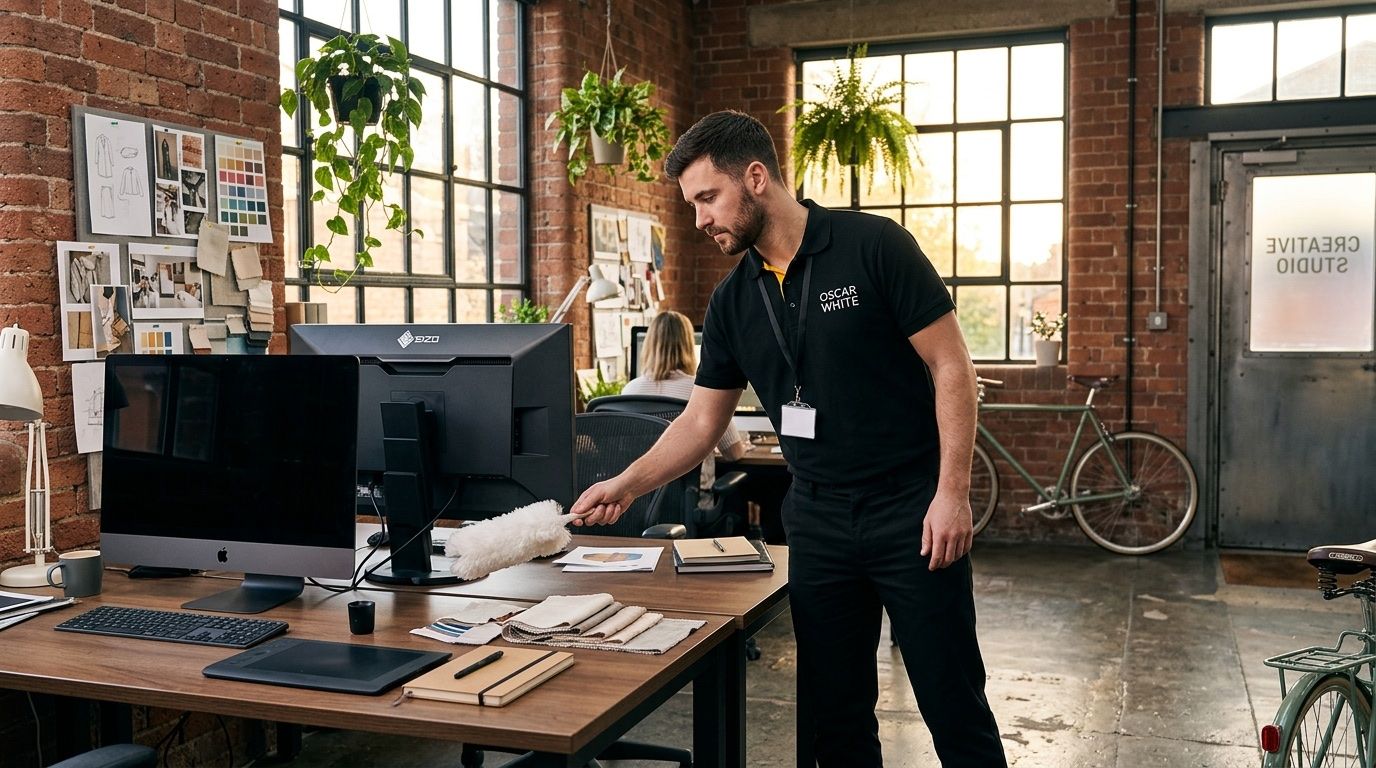
Warehouse conversions and studios punish generic methods: polished slabs, exposed timber, gallery walls and production equipment all have a wrong product waiting to damage them. The plan here is built at the walkthrough, surface by surface, and the crew consistency matters double because so much of the standard is site knowledge. Scheduling flexes around shoots and launches rather than billing around them.
The four variables, side by side
| Workspace | What drives the plan |
|---|---|
| Office | Walkthrough-path presentation; 2–5 visits/week; after-hours access; drift caught by reporting |
| Clinic | Infection control; TGA-listed chemistry; colour-coded equipment; audit-ready documentation |
| Gym | Touchpoint cycles in hours; change rooms first; equipment-safe sanitisers |
| Coworking | Intra-day resets; member-hours chemistry; evidence for the community manager; scope that moves with the floor |
| Studio | Surface-matched methods; crew continuity; schedule flexes around production |
The common thread is that adaptation is not a virtue, it is the minimum. A scope that does not name your workspace type’s specific failure mode was not written for you. Tell us what you run and we will walk the space and write the plan against it: a 15-minute call is where every one of these plans starts.
Frequently asked questions
Should different workspace types have different cleaning scopes?
Yes, structurally different, not just longer or shorter. Products, frequency, timing and evidence all change between an office, a clinic, a gym, a coworking floor and a studio. A one-template scope fails each of them differently.
How often should each workspace type be cleaned?
Offices typically two to five visits a week; clinics daily with high-touch cycles through the day; gyms daily with touchpoint sanitising measured in hours; coworking daily plus intra-day resets; studios to a rhythm set by production. Frequency follows use, not habit.
Does a specialised scope cost more than a generic one?
Usually somewhat, because the right products, frequencies and documentation are real costs. But the generic scope costs more in the end: it fails at your space’s specific pressure point and the rework, complaints and churn land on you. Rates by sector are in our pricing guide.